Batteries, lighters, and spray cans: the dangerous trash rules
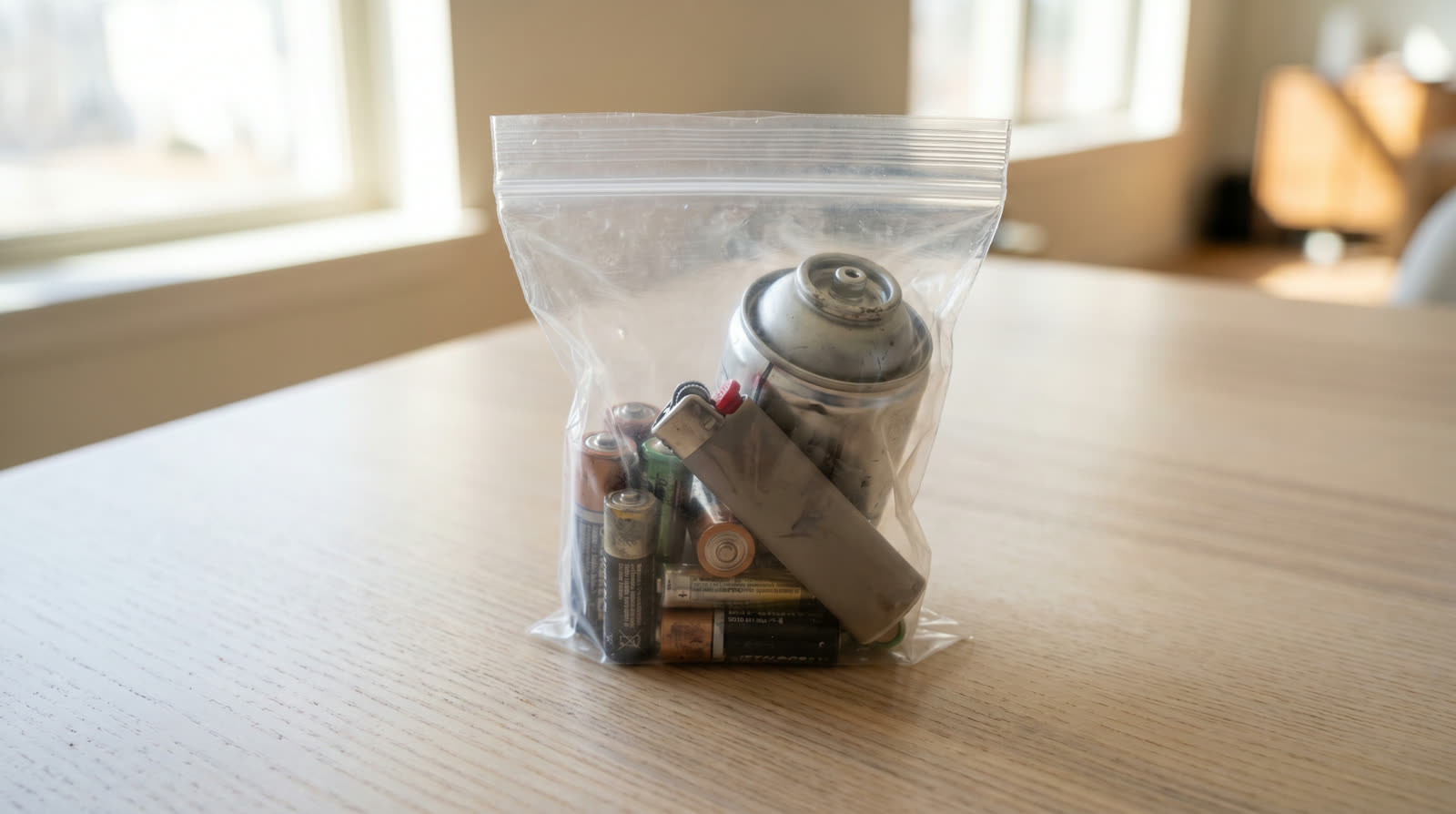
A few everyday items can start fires inside a garbage truck, so Japan keeps them out of the normal bags. Batteries, lighters, and spray cans each have their own small rule.
Batteries
Regular dry-cell batteries often go with non-burnable garbage, though many wards collect them separately and some shops have a drop-off box. Rechargeable and button batteries are different. Take those to an electronics or home store with a battery recycling box, since they should not go in household trash at all.
Lighters
Use a lighter up completely before you toss it. One with fuel left can burst when crushed. Once it is empty, most wards take it with non-burnable or a small-metal category. Check before you throw out a half-full one.
Spray cans
Empty the can fully first. Release the rest outdoors, away from any flame, until nothing is left. Most wards then collect cans separately from regular trash. A few still ask you to make a small hole in the can, but many now tell you not to, so follow your ward's current rule.
The common thread is fire risk. Anything with leftover gas, fuel, or charge can ignite during collection, which is why these get pulled out of the normal stream.
When you are not sure whether a battery or can is empty enough, or which bin it belongs in, Gomi Guide gives you the answer for your ward.
Get the rule for your ward Not sure if a can is empty enough or which bin it needs? Gomi Guide has the answer. Free on the App Store.