Plastic, pura, or PET: which bin does it go in?
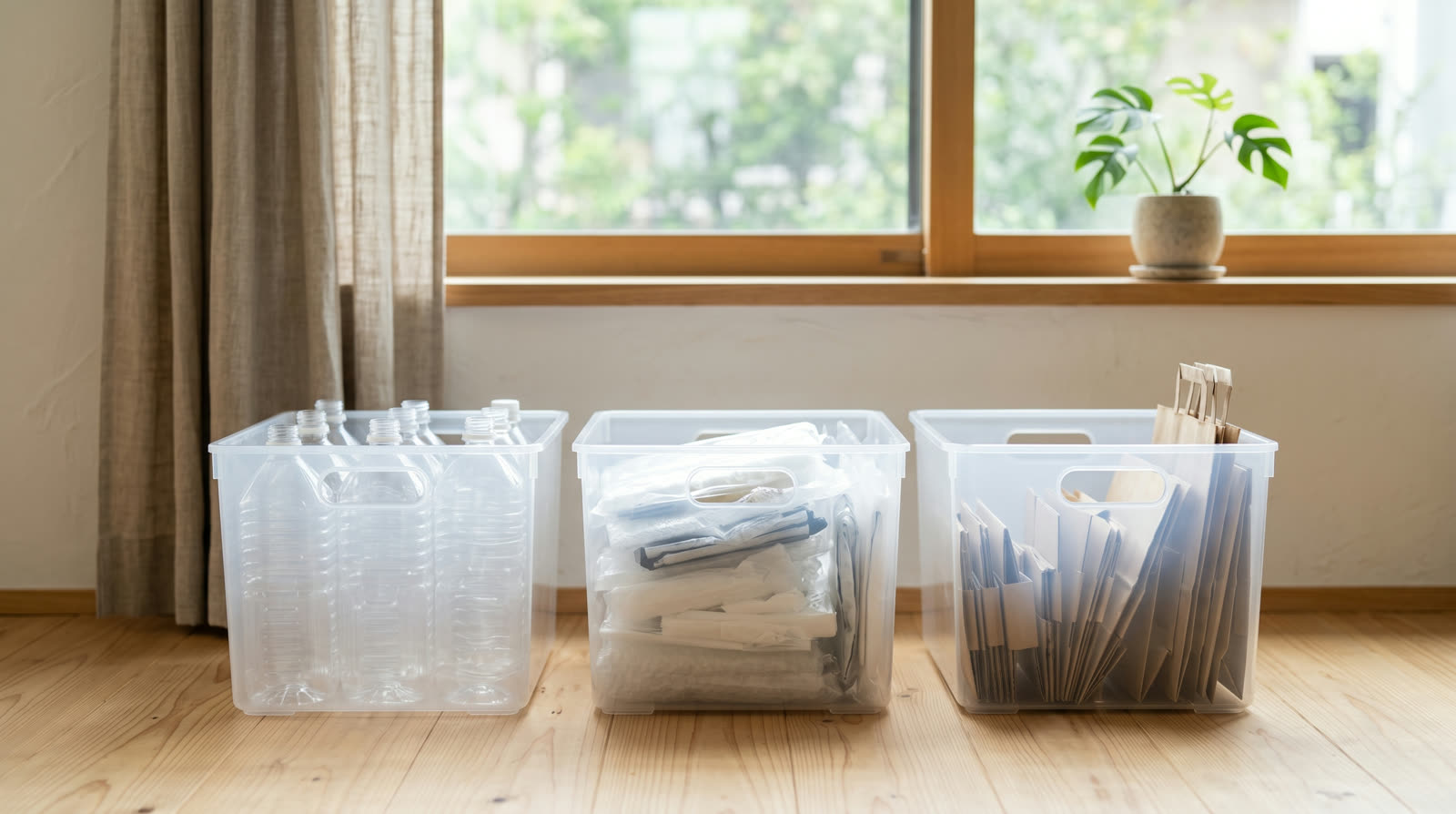
Pick up almost anything in a Japanese supermarket and you will find a small printed mark telling you how to sort the packaging. Two of those marks look similar and go to completely different places. Once you can read them, recycling day stops being a guessing game.
The PET bottle mark
A circle of arrows with the letters PET inside means exactly one thing: a drink bottle made of PET plastic. Water, tea, soda, sports drinks. These get collected on their own, separate from everything else.
Prep is quick. Rinse the bottle, twist off the cap, peel off the label, and give it a light crush. The cap and the label are not PET, so they go with your plastic packaging, not with the bottle.
The pura mark
A mark with the katakana プラ (pura) means plastic packaging. This is the big one. Snack wrappers, the tray under your meat, the film on a bento, bottle caps, yogurt cups, the bag your vegetables came in. If a plastic thing was there to hold or wrap a product, it usually wears the pura mark.
Rinse anything that had food in it. If something is too greasy to clean, like a used oil bottle or a pizza-stained wrapper, many wards would rather you put it in burnable than contaminate the recycling. When you are unsure, your ward's rule wins.
Plastic with no mark at all
Here is the catch. A plastic bucket, a broken toy, a pen, a storage bin. None of those are packaging, so none of them carry the pura mark. They are not recycled with it either. Depending on your ward and the size of the item, they go in burnable, non-burnable, or oversized garbage.
One honest warning: some wards recycle plastic packaging and some simply burn it. The mark tells you what the item is. Your ward tells you where it goes. Always check the local rule.
That last line is the whole problem in one sentence. The mark is national, the rule is local, and holding a yogurt cup is a bad time to go reading a ward handbook.
Skip the handbook Point Gomi Guide at the item, set your region once, and it tells you the right bin and the next pickup day for your ward. Free on the App Store.